Solar street lighting has become the gold standard for sustainable urban development and off-grid illumination. However, the transition from traditional lighting to solar technology is not merely a plug-and-play process. Many contractors and project managers encounter performance issues not because the technology is faulty, but because of critical errors made during the installation phase.
Drawing from industry insights and technical guidelines provided by experts, this guide explores the most common solar street light installation mistakes and how to avoid them to ensure long-term reliability and efficiency.
Perhaps the most frequent mistake is ignoring the local environment. Solar panels require direct sunlight to trigger the photovoltaic effect. Even partial shading from tree branches, power lines, or nearby buildings can lead to a massive drop in energy production.
The Mistake: Placing a pole under a tree canopy or in the shadow of a tall building.
The Consequence: A single leaf covering a small portion of the panel can significantly reduce the output of the entire module due to the way solar cells are wired in series.
The Solution: Conduct a Solar Path analysis before digging foundations. Ensure the installation site has an unobstructed view of the sun, particularly during the peak hours of 10:00 AM to 3:00 PM.
Solar panels are directional. If they aren’t facing the right way, they won’t harvest enough energy to keep the battery charged through the night.
The Mistake: Facing panels East or West for aesthetic symmetry along a road, or setting the angle too flat.
The Consequence: Reduced charging efficiency. If the angle is too flat, dust, leaves, and snow will accumulate on the surface rather than sliding off, further blocking sunlight.
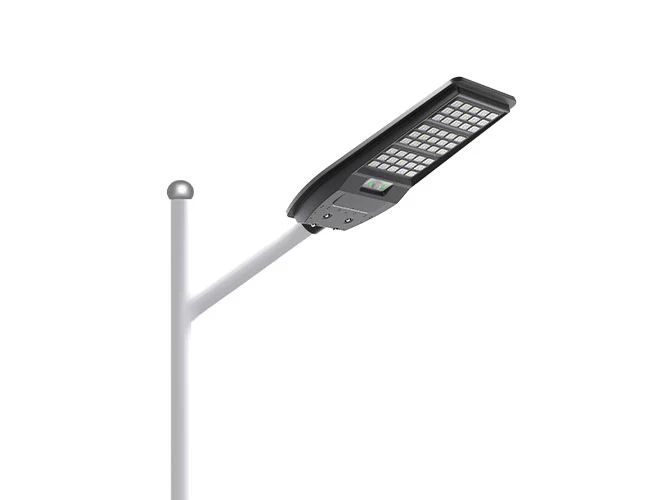
The Solution: As a general rule, panels in the Northern Hemisphere should face True South, and those in the Southern Hemisphere should face True North. The tilt angle should generally match the site’s latitude. For those looking for optimized designs, Anern offers adjustable mounting brackets that allow for precise angular positioning to maximize solar gain regardless of geographic location.
Solar street lights use sensors (usually the solar panel itself) to detect when it is dark. A common mistake is installing solar lights too close to other powerful light sources.
The Mistake: Installing a solar light directly under a traditional utility-grid street lamp or near bright building floodlights.
The Consequence: The solar controller detects the external light and thinks it is still daytime. Consequently, the light will fail to turn on at night.
The Solution: Ensure that no secondary light sources are bright enough to trigger the panel’s daytime threshold. If overlapping is unavoidable, choose a system with a programmable controller that allows for timed operation rather than just light-sensing.
In split-type solar street lights, the wiring between the panel, the battery, and the LED head is a frequent point of failure.
The Mistake: Reversing the positive (+) and negative (-) wires or failing to fully seat waterproof connectors.
The Consequence: Reversing polarity can burn out the solar controller or prevent charging entirely. Poorly secured connectors allow moisture ingress, leading to corrosion and short circuits.
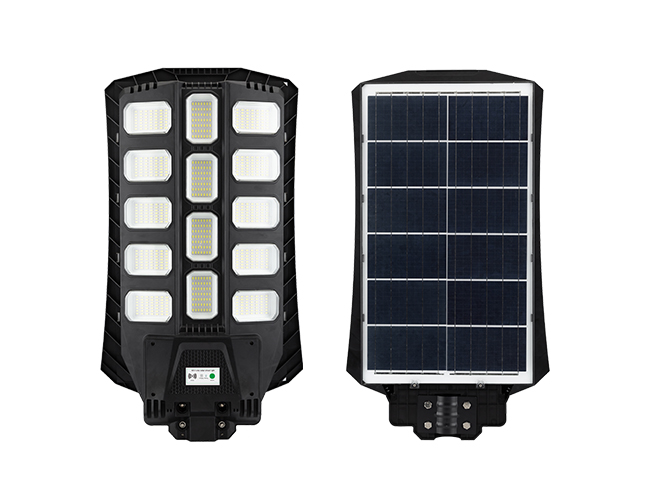
The Solution: Always use a multimeter to verify polarity before making final connections. To mitigate these risks, many installers prefer Anern’s all-in-one or all-in-two solar street light. These integrated systems come with pre-configured internal wiring and high-quality plug-and-play waterproof connectors, which drastically reduce human error during installation.
The battery is often the most mistreated component during installation.
The Mistake: Burying batteries too shallow in hot climates or failing to use a protective battery box.
The Consequence: Extreme heat significantly shortens the lifespan of lithium and lead-acid batteries. Conversely, in cold regions, a battery buried above the frost line may lose its ability to hold a charge.
The Solution: Follow manufacturer guidelines for burial depth to maintain a stable temperature. Use ventilated, waterproof battery boxes to prevent gas buildup and moisture damage.
Some installers choose the cheapest unit available without calculating the "Autonomy Days" (the number of days the light can run if there is no sun).
The Mistake: Using a light with a small battery/panel capacity in an area known for long rainy seasons.
The Consequence: The light works perfectly for the first week but dies after two days of cloudy weather, leading to safety concerns and client dissatisfaction.
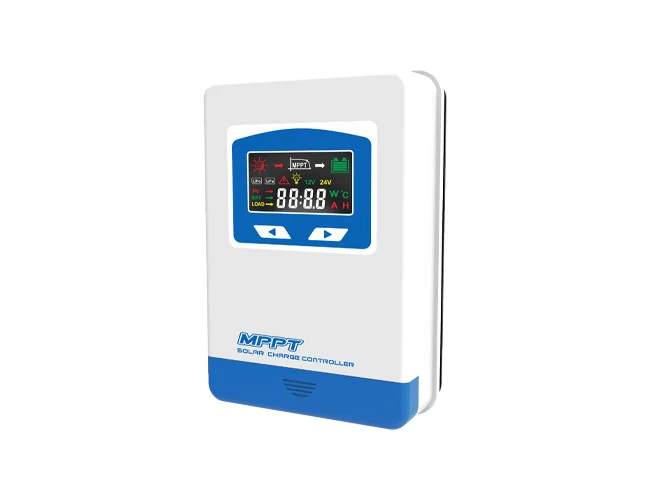
The Solution: Perform a site-specific load calculation. Professional manufacturers like Anern provide detailed technical consultations to match the battery capacity and panel wattage to the specific meteorological data of the installation site. The high-efficiency MPPT controllers are specifically designed to squeeze the most energy possible out of low-light conditions.
The solar panel acts like a sail in high winds.
The Mistake: Using an undersized concrete foundation or failing to tighten the anchor bolts with the correct torque.
The Consequence: The pole may lean over time or, in extreme cases, be blown over during a storm, causing property damage or injury.
The Solution: Always adhere to the engineering specifications for the wind load in your area. Use a spirit level to ensure the pole is perfectly vertical and double-check all mechanical fasteners after the pole is erected.
Avoiding solar street light installation mistakes is easier when you start with high-quality, well-engineered hardware. Anern has spent years refining their solar street light designs to be installer-friendly.
By choosing Anern products, you benefit from:
Intelligent Control Systems: The controllers automatically adjust light output based on battery capacity, extending the lighting time even when installation conditions are less than ideal.
High-Efficiency PV Cells: Anern uses premium monocrystalline silicon cells that perform better in low-light and high-temperature environments compared to generic alternatives.
Durable Housing: The lights feature IP66 or higher waterproof ratings and die-cast aluminum housing, protecting the sensitive internal electronics from the elements.

The success of a solar street light project is 50% product quality and 50% installation precision. By avoiding common pitfalls, such as improper shading, incorrect orientation, and poor wiring, you can ensure that your investment provides clean, bright light for years to come.
Before starting your next project, consult with experts and refer to technical guides from established manufacturers. For high-performance solar solutions and professional guidance on avoiding these common mistakes, visit Anern to explore the range of smart solar street lighting systems.

Make your business profitable
Zero your Electricity bill
Leading the solar solutions industry

 English
  français
  Deutsch
  Español
  italiano
  русский
  português
  العربية
  Türkçe
  Malay
Malay  Indonesia