
 English
  français
  Deutsch
  Español
  italiano
  русский
  português
  العربية
  Türkçe
  Malay
Malay  Indonesia

Solar Street Lighting Solutions for Government & Infrastructure Projects
Anern is not just a solar street light manufacturer — it is also an engineering-driven solar street light solutions provider. Empowering smarter, safer, and more reliable solar street lighting projects through professional engineering design, customized system configuration, and end-to-end technical support. Anern bridges the gap between innovative solar technology and real-world municipal roads, highways, public infrastructure, villages, and large-scale commercial projects needs.
3,000+
Projects
Delivered
150+
Countries
Covered
600,000+
Lights
Deployed
Global Infrastructure Scenarios
traffic
Municipal & Highway Lighting
Reliable solar street lighting solutions for urban main roads, municipal streets, highways, and public transportation corridors requiring stable illumination and long-term operation.
cottage
Rural Village Lighting
Off-grid solar lighting solutions for rural roads and remote villages where grid infrastructure is limited or unavailable.
account_balance
Commercial & Public Infrastructure Lighting
Customized solar lighting solutions for public infrastructure, parking lot, running track, industrial park and large-scale outdoor development projects.
smart_toy
Smart City Lighting Projects
IoT-enabled solar street lighting systems with remote monitoring, adaptive dimming, and centralized management capabilities.
Why Infrastructure Contractors Choose Anern
We understand the complexities of large-scale engineering. Our processes are built to support EPC firms from tender to installation.
01
Project Engineering Support
Lighting design, pole layout, and system configuration.
02
Large-Scale Delivery
Bulk orders from hundreds to thousands of units with QA.
03
Municipal Experience
Proven road and public facility projects worldwide.
04
Outdoor Performance
Designed for heat, rain, wind, and coastal corrosion.
05
EPC & Tender Support
IES files, CAD drawings, BOQ, and documentation.
Proven Large-Scale Projects
Anern has supported large-scale solar street lighting projects for municipal roads, highways, and public areas across Africa, Asia, Americas, Europe, and the Middle East.
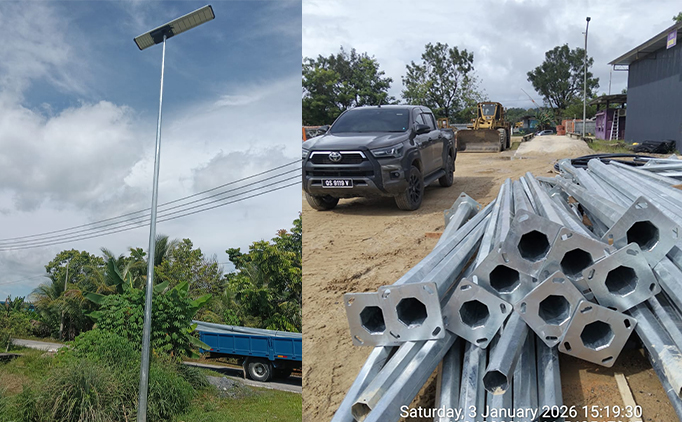
Municipal Road
Malaysia — 921 Sets
Government Road Lighting Project
location_onSoutheast Asia
inventory_2Model AN-SLZ 60W
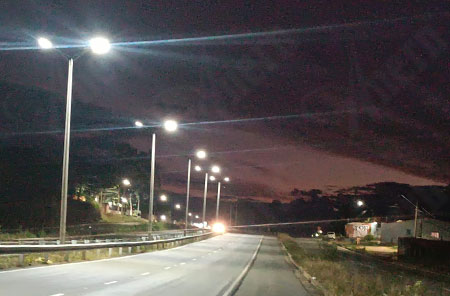
Industrial Park
Brazil - 2,000 Sets
Government Urban Main Road
location_onEurope
inventory_2Model AN-SLX-150W
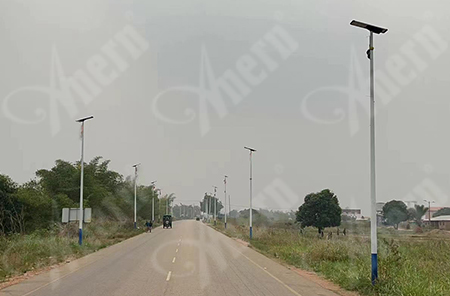
Rural Village
Angola — 589 Sets
Government Solar Lighting Project
location_on Africa
inventory_2Model AN-SLZ 50W
Engineering Support for EPC & Tenders
We provide more than just hardware. Our engineering team acts as your technical consultant throughout the project lifecycle.
- DIALux Lighting Simulations & Photometric Analysis
- Structural Calculation for Pole Wind Resistance
- Detailed BOQ (Bill of Quantities) Development
- Compliance with International Standards (CE, RoHS, IP67)
- Custom Product Modification for Specific Needs
- Commercial & Industrial Solar Lighting
- Commercial Solar System
- Residential Solar Systems
- Commercial LED Lighting

Solar Street Lighting Technologies
battery_charging_full
Lithium Battery Technology
Grade-A LiFePO₄/Li-ion cells; ≥3,000 cycles @ 80% DoD. BMS with cell balancing and thermal protection.
lightbulb
LED Technology
System efficacy ≥170–190 lm/W options. Roadway optics IES Type I–V with low glare for safety.
settings_input_component
Solar Controller Technology
MPPT efficiency ≥98%. Adaptive dimming and hybrid options for reliable dusk-to-dawn operation.
router
IoT & Interoperability
NEMA/Zhaga interface; D4i/DALI-2 ready. Platforms: LoRaWAN / NB-IoT / 4G remote diagnostics.
thunderstorm
Built for Harsh Environments
IP66, IK09/10, surge 10/20 kV, corrosion resistance per ISO 9227 for coastal and desert projects.
architecture
Computer Simulation
Designs target EN 13201 / IES RP classes with Dialux. Accurate photometric performance verification.
solar_power
High-Efficiency Solar Panels
Mono TOPCon/PERC options; module efficiency ≥22%. PID-resistant and low-LID process.
Support for EPC & Government Contractors
description
Technical Datasheets
Complete engineering specifications for every component including solar panels and batteries.
download Download
light_group
IES Files
Standardized photometric data for accurate lighting simulations in DIALux and other industry software.
download Download
bar_chart
DIALux Reports
Comprehensive lighting design reports including lux levels, uniformity, and energy consumption analysis.
download Download
verified
ISO / CE / RoHS Documents
Full certification package required for government tenders and international compliance standards.
download Download
battery_charging_full
Battery Test Reports
Detailed cycle life, capacity, and thermal stability reports for LiFePO4 battery systems.
download Download
architecture
Pole Drawings
CAD drawings and structural calculations for wind resistance and foundation requirements.
download DownloadProcurement & Project Support FAQ
help Do you support large orders exceeding 500+ units?
Yes, Anern specializes in high-volume municipal supply with a monthly production capacity of over 30,000 sets.
help Can you provide technical documentation for bidding?
Absolutely. We provide full technical dossiers including IES files, certificates, and detailed datasheets for formal tender applications.
help Can Anern provide lighting design and calculation reports?
Yes. Anern offers professional lighting simulations and engineering calculations, including LUX level analysis, pole spacing recommendations, and energy balance reports.
help Can Anern support overseas installation and commissioning?
Anern provides detailed installation manuals, engineering drawings, and commissioning guidance. For large or complex projects, we also offer remote technical support to ensure correct installation and system setup.
help Can Anern customize solar street lighting solutions for specific projects?
Absolutely. From system configuration and lighting design to structural details and smart control logic, Anern offers flexible customization to meet project requirements and local regulations.
help How does Anern handle harsh environments such as coastal or desert areas?
Our engineering team selects suitable materials, coatings, and structural designs based on environmental conditions. We provide anti-corrosion solutions for marine environments and system optimization for high-temperature or dusty regions.
Request Project Solution
Consult with our engineering department for a tailor-made proposal for your upcoming infrastructure project.
mail
group@anern.com
call
+86 13570048098
