For an EPC project, choosing between an all in one integrated solar street light and an all in two solar street light is not simply a question of product structure. The decision affects installation labor, logistics, solar-panel flexibility, battery autonomy, maintenance access and long-term project risk.
Anern already explains the basic structural differences between integrated, semi-integrated and split solar lights in its existing content. For EPC teams, the more useful question is how each architecture behaves across installation, commissioning and years of operation.
An EPC contractor has to think beyond individual product specifications.
Installation labor: How many components, brackets and electrical connections must crews complete on site?
Logistics: How efficiently can hundreds or thousands of units be packed, moved and distributed along the road?
Configuration flexibility: Can panel and battery capacity be adjusted for difficult project conditions?
Maintenance access: Which components will eventually need inspection or replacement?
Project risk: What happens if shading, low solar availability or long autonomy requirements exceed the standard configuration?
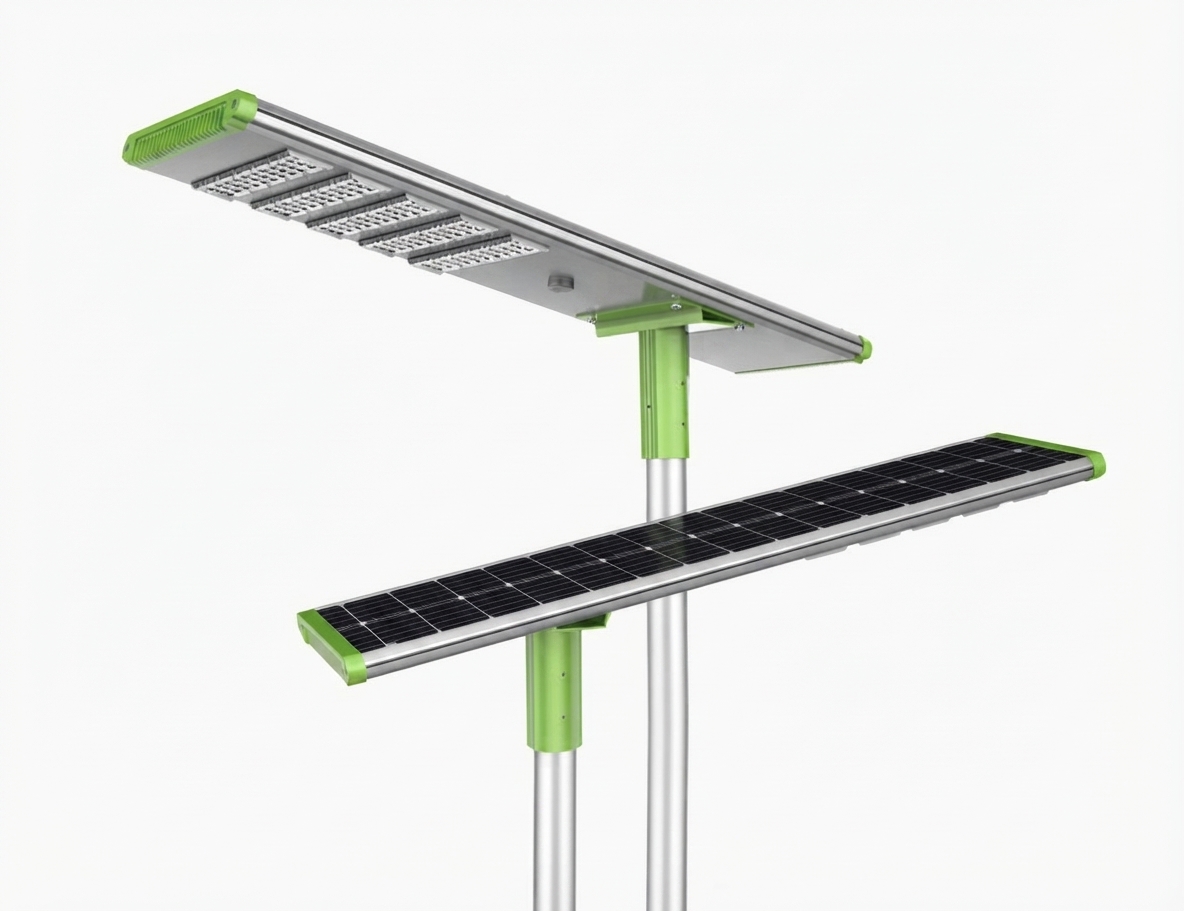
An all in one solar street light generally reduces component count and field assembly. An all-in-two architecture separates the panel from the lighting unit, creating more configuration flexibility but slightly more installation work.
Neither characteristic automatically makes one system better for every EPC project.
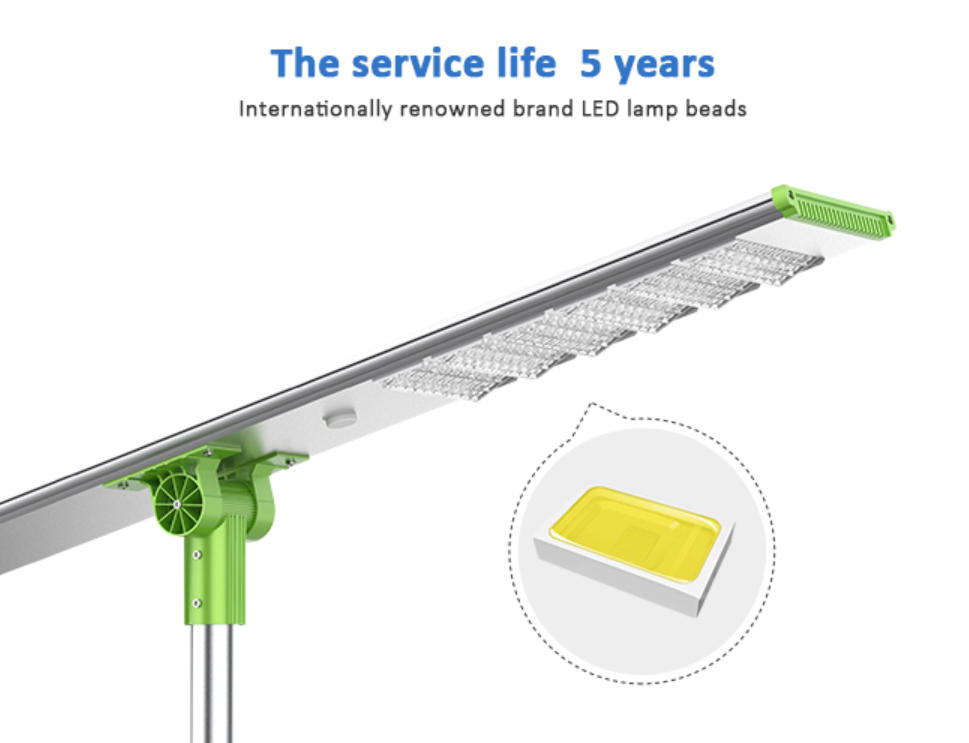
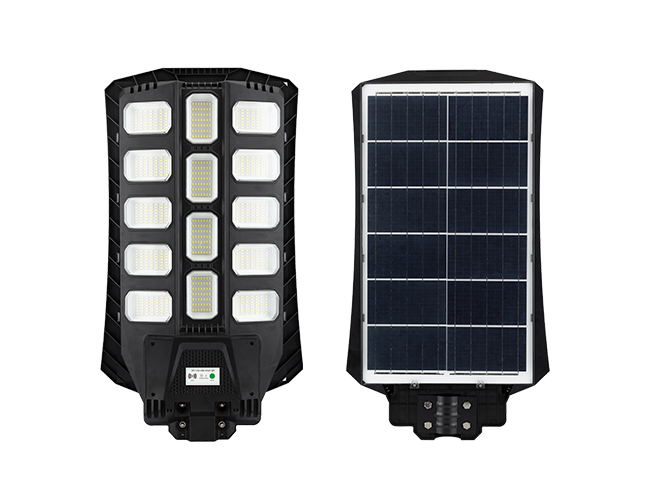
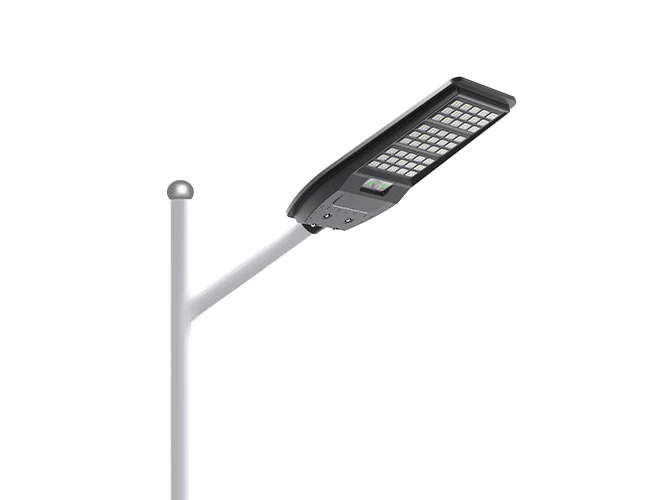
The main operational advantage of an all in one integrated solar street light is compactness. The solar panel, battery, controller and luminaire are combined into one unit, reducing field wiring and helping crews complete installation quickly.
This can be valuable in projects with limited skilled labor or large numbers of relatively standardized poles.
An all in two solar street light separates the solar panel from the lamp body. The installer therefore needs to mount and orient the panel separately, but that independence also allows the panel to face the most useful solar direction even when the luminaire must follow road geometry.
Anern's semi-integrated systems also support larger solar panels and battery capacities than compact integrated designs, which can be useful for higher-power or longer-runtime projects.
The trade-off is therefore installation simplicity versus energy-system flexibility.
Rainy-day autonomy can strongly influence architecture.
A compact all-in-one design has physical limits because the panel and battery must fit within an integrated product envelope. That can be completely adequate where solar conditions are strong and backup requirements are moderate.
When a project requires longer operation through consecutive low-solar days, the energy calculation may call for a larger battery and a larger solar panel.
All-in-two systems have an advantage here because the separate panel is less constrained by the dimensions of the lamp head. Anern's all-in-two range is specifically designed to support larger panels and higher battery capacity for longer operating hours and infrastructure projects.
This does not mean all long-autonomy projects automatically require semi-integrated lights. The actual decision should still come from nightly load, dimming profile, local peak sun hours and required backup days.
The architecture selected during procurement continues to matter years after installation.
Battery service: Maintenance teams should understand where the battery is located and how it can be accessed or replaced.
Solar-panel replacement: A separate panel can often be serviced without replacing or dismantling the complete lamp assembly.
Pole-top work: Integrated equipment can simplify component count but may concentrate more service operations at the luminaire.
Controller access: Settings and replacement procedures should be considered during commissioning.
Spare parts: Large EPC projects benefit from defined replacement components rather than treating every failure as a complete-unit replacement.
Anern notes that semi-integrated construction allows components such as the solar panel to be replaced independently, while integrated products emphasize simplified installation and fewer field connections.
For EPC teams, maintenance should therefore be evaluated before procurement rather than after the warranty period begins.
The difference between installing 50 lights and 2,000 lights is not simply quantity.
At large scale, small differences in unloading, assembly time, bracket installation and commissioning can multiply into significant project labor.
Compact all in one solar street light systems can reduce the number of separate components that must be handled at each pole. All-in-two systems introduce a separate panel but can provide additional configuration flexibility where road orientation or solar conditions vary across the project.
Anern's project portfolio includes installations ranging from smaller rural deployments to a 2,000-set urban main-road solar lighting project in Brazil, illustrating the scale at which logistics and repeatable installation become important project variables.
For large EPC contracts, installation design should therefore consider total site labor rather than only unit purchase price.
Architecture should follow project conditions rather than a universal preference.
| Project Condition | More Likely Direction |
|---|---|
| Fast standardized installation | Evaluate All-in-One |
| Limited field labor | Often All-in-One |
| Compact municipal road | Evaluate All-in-One |
| Larger battery requirement | Often All-in-Two |
| Extended rainy-day autonomy | Evaluate All-in-Two |
| Independent panel orientation | All-in-Two has an advantage |
| High-power infrastructure road | Evaluate All-in-Two |
This matrix is intentionally not absolute.
A well-designed all in one integrated solar street light may be appropriate for a municipal project, while an all in two solar street light may be preferred where energy flexibility outweighs installation simplicity.
The final selection should follow road conditions, solar availability, autonomy requirements, installation resources and maintenance strategy.
For EPC projects, the choice between an all in one integrated solar street light and an all-in-two system should not be reduced to which design is newer or more powerful.
All-in-one systems emphasize compact installation and fewer field connections. All-in-two systems provide greater freedom to size and orient the solar panel and accommodate higher battery requirements.
The better architecture is the one that reduces total project risk across logistics, installation, energy autonomy, maintenance and future replacement.
For government and EPC projects, lifecycle performance matters more than choosing a product category in isolation.
Neither is universally better. The choice depends on installation resources, energy requirements, solar conditions and maintenance strategy.
All-in-one systems generally require fewer separate components and field connections.
All-in-two systems generally offer greater flexibility for larger panel and battery configurations.
It can simplify servicing of separately mounted components, but maintenance requirements depend on the specific product design.
The suitable architecture should be selected from project scale, autonomy, solar conditions, installation requirements and lifecycle maintenance rather than product type alone.


Make your business profitable
Zero your Electricity bill
Leading the solar solutions industry

 English
 français
 Deutsch
 Español
 italiano
 русский
 português
 العربية
 Türkçe
 Malay
 Indonesia