A smart solar street light is valuable when intelligent control solves a real energy, maintenance or operational problem—not simply because a motion sensor has been added to the luminaire. For municipal roads, smart control can adjust brightness according to time or traffic, monitor battery conditions remotely and help maintenance teams identify faults before sending crews to the site.
However, not every road needs the same level of intelligence. A successful smart solar street light project should match control functions to traffic patterns, battery autonomy, maintenance workload and the scale of the road network.
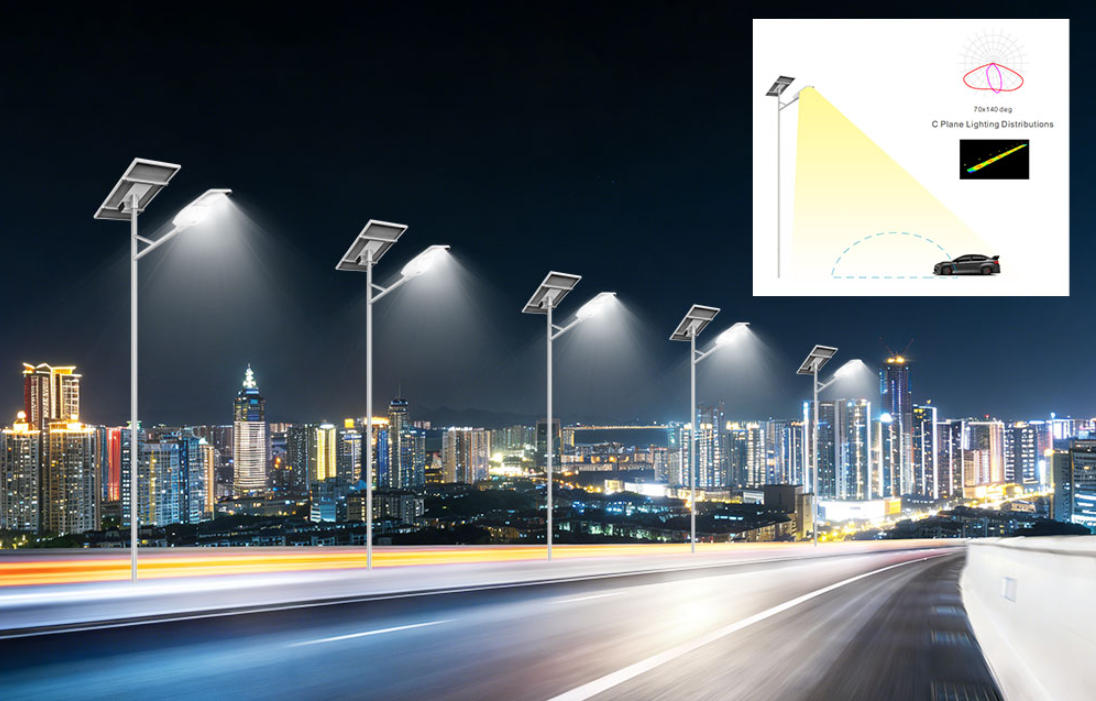
Smart lighting can include several layers of control beyond basic presence detection:
Time-based dimming: Output follows a programmed schedule, such as higher brightness during evening traffic and lower output after midnight.
Adaptive energy management: Lighting output can respond to available battery energy or operating conditions.
Remote monitoring: Operators can check lamp status, battery levels and system performance without visiting every pole.
Fault alerts: Communication systems can report abnormal operating conditions for faster maintenance planning.
Centralized control: Multiple luminaires can be managed through one platform rather than adjusted individually.
Anern's current smart lighting system supports remote brightness adjustment, scheduling, battery-status monitoring and fault-condition reporting through centralized control functions.
The useful definition of a smart solar street light is therefore a solar lighting system that manages both light output and operational information intelligently.
A conventional solar street light running at maximum output throughout the night creates a relatively predictable but high battery demand. Smart dimming changes that energy profile.
For example, a luminaire might operate at full output during busy evening hours, reduce to 70% later and drop to 40% during low-traffic periods. The lamp may still provide useful road illumination throughout the night while consuming less total energy.
This matters because battery autonomy depends on nightly energy consumption. Lower consumption can preserve more stored energy for cloudy or rainy periods.
Anern's smart-control engineering specifically includes adaptive dimming and charge/discharge strategies intended to reduce energy consumption and extend operation during low-sunlight conditions.
For a road smart solar street light system, dimming therefore serves an energy-management function rather than simply changing perceived brightness.
Maintenance becomes increasingly difficult as the number of installed lights grows.
With conventional standalone lights, a failed lamp or weak battery may only be discovered through physical inspection or public complaints. A connected smart solar street light can provide operational data remotely.
A municipal control platform may show whether a lamp is operating, report battery condition, identify abnormal power behavior and generate fault alerts. Maintenance teams can then prioritize inspections instead of checking hundreds of poles individually.
Anern's smart-city engineering resources include remote monitoring of lighting status and battery performance, automatic maintenance alerts and centralized scheduling.
The financial value of this capability is usually greater on a large distributed network than on a small road with only a few luminaires.
Motion detection is useful when traffic is intermittent.
A rural access road, industrial service road, park connection or low-traffic community road may remain quiet for long periods. The light can operate at reduced output and increase brightness when movement is detected.
A continuously busy arterial road is different. If vehicles repeatedly trigger full output, motion sensing may provide little energy benefit and could add unnecessary control complexity.
A smart solar street light project should therefore evaluate:
Traffic frequency: Low and intermittent traffic offers more opportunity for sensor-based energy savings.
Required lighting continuity: Some roads should maintain relatively consistent illumination regardless of traffic.
Detection range and speed: The control response must suit the way vehicles or pedestrians approach.
Road function: A rural path and a major highway should not automatically use the same sensor strategy.
Motion detection should solve a usage pattern, not simply appear on the specification sheet.
Intelligent lighting introduces additional benefits, but it also adds system requirements.
Communication modules, gateways and monitoring platforms need to be commissioned and maintained. Network coverage must be considered if the system relies on LoRaWAN, NB-IoT, 4G or another communication method. Anern lists these communication options within its smart-control engineering solutions.
Remote systems may also require user permissions, data management and communication-security planning.
More control functions can therefore mean more commissioning work. The engineering question is whether the operational savings justify that complexity.
For a small isolated road, a programmed timer may provide enough control. For a city-wide network, remote diagnostics and centralized dimming may substantially reduce maintenance workload.
Different projects gain different levels of value from intelligent control.
| Project Scenario | Smart Function With Most Value |
|---|---|
| Low-traffic rural road | Motion detection / dimming |
| Municipal road network | Remote monitoring |
| Seasonal traffic area | Adjustable schedules |
| Remote infrastructure | Fault alerts |
| Large smart-city program | Centralized control and data |
| Constant high-traffic road | Monitoring more useful than motion sensing |
This is why smart solar street light selection should begin with the operational problem.
Anern's current platform can integrate remote diagnostics, centralized dimming and smart-city or traffic-management systems, making these functions particularly relevant to larger municipal deployments.
A smart solar street light should not be defined by how many electronic features it contains.
Adaptive dimming can reduce nightly battery demand. Remote monitoring can reduce unnecessary site inspections. Fault alerts can improve maintenance response, while motion sensors can conserve energy on genuinely low-traffic roads.
But additional communication, commissioning and management also create complexity.
For a municipal smart solar street light project, intelligent control creates the most value when it addresses a measurable problem in energy autonomy, maintenance or network management rather than being added simply as a product feature.
It is a solar street light that uses programmed or connected controls to manage brightness, energy use, monitoring or system operation.
It reduces LED output during periods when full brightness is unnecessary, lowering total nightly energy consumption.
Yes. Connected systems can provide lamp status, battery information, fault alerts and remote control.
Not always. Continuously busy highways may gain less from motion-triggered dimming than low-traffic roads.
It is most useful when remote monitoring, centralized control or reduced maintenance visits provide clear operational value.

Make your business profitable
Zero your Electricity bill
Leading the solar solutions industry

 English
 français
 Deutsch
 Español
 italiano
 русский
 português
 العربية
 Türkçe
 Malay
 Indonesia