Choosing the correct wattage is one of the most important decisions when selecting a solar street light for outdoor lighting projects. The wattage directly affects lighting brightness, coverage area, battery capacity, solar panel size, and overall system performance.
Many buyers believe that higher wattage always means better lighting performance. However, the ideal power depends on multiple factors, including road width, pole height, installation environment, sunlight conditions, and required working hours.
A 200W solar street light may be suitable for highway projects, while a 60W or 100W solar street light may already meet the requirements of village roads or residential areas.
For contractors, distributors, government organizations, and infrastructure developers, selecting the correct power configuration helps achieve reliable illumination while avoiding unnecessary investment.
As an experienced solar street light manufacturer, Anern provides a wide range of solar lighting solutions, including All-In-One Solar Street Light and All-In-Two Solar Street Light, designed for different applications such as rural roads, urban streets, highways, commercial areas, and public infrastructure projects.
Understanding solar street light wattage requirements allows buyers to select the right solution based on actual project needs instead of simply choosing the highest power option.
Solar street light wattage refers to the power consumption of the LED lighting module. It determines how much electrical energy the lighting system uses during operation and directly influences illumination performance.
Common solar street light wattage options include:
However, wattage is only one part of a complete solar lighting system. A reliable solar street light solution also depends on:
LED lighting efficiency
Solar panel capacity
Battery storage capacity
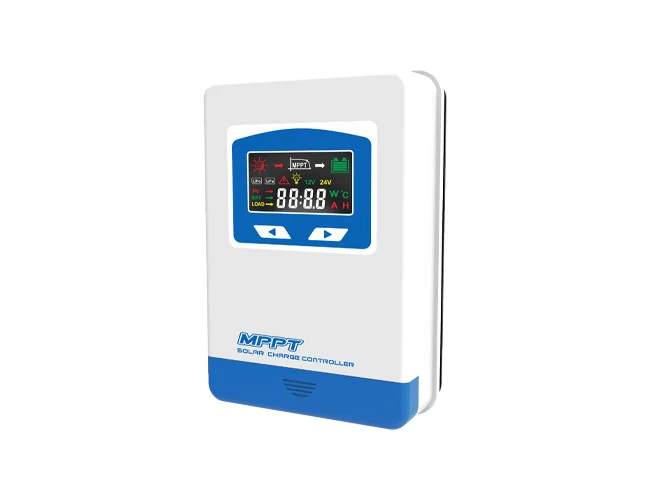
Controller performance
Installation height
Lighting distribution design
A properly matched system can provide better performance than a higher wattage product with unsuitable components.
For example, a 100W solar street light with an efficient LED module, suitable battery capacity, and optimized solar panel configuration may provide better results than a poorly designed higher wattage system.
When selecting solar street lights, buyers should evaluate the complete system configuration rather than focusing only on the wattage number.
The correct wattage depends mainly on the project environment and lighting requirements.
The wider the road and the larger the required lighting area, the higher the power requirement.
| Application | Recommended Wattage |
|---|---|
| Pedestrian paths | 20W-40W |
| Residential roads | 40W-100W |
| Village roads | 60W-120W |
| Urban roads | 100W-150W |
| Highways | 150W-200W |
For small residential roads, a 60W or 80W solar street light may provide sufficient brightness. For larger roads and infrastructure projects, higher wattage systems with larger solar panels and batteries are usually preferred.
Pole height directly affects light distribution and coverage range.
Typical recommendations:
| Pole Height | Recommended Power |
|---|---|
| 3-5 meters | 30W-60W |
| 6-8 meters | 80W-150W |
| 8-12 meters | 150W-200W |
Higher poles require stronger lighting output to maintain suitable brightness levels on the ground. Choosing the correct wattage together with proper pole height helps improve lighting uniformity and reduce dark areas.
The local climate and sunlight conditions also influence wattage selection.
Areas with limited sunlight may require:
Larger solar panels
Higher battery capacity
Longer backup time
In regions with sufficient sunlight, a properly designed lower wattage system may still provide reliable lighting performance.
Different applications require different wattage solutions.
Recommended: 60W-100W Solar Street Light
Rural lighting projects usually focus on:
Easy installation
Low maintenance
Cost efficiency
Reliable nighttime lighting
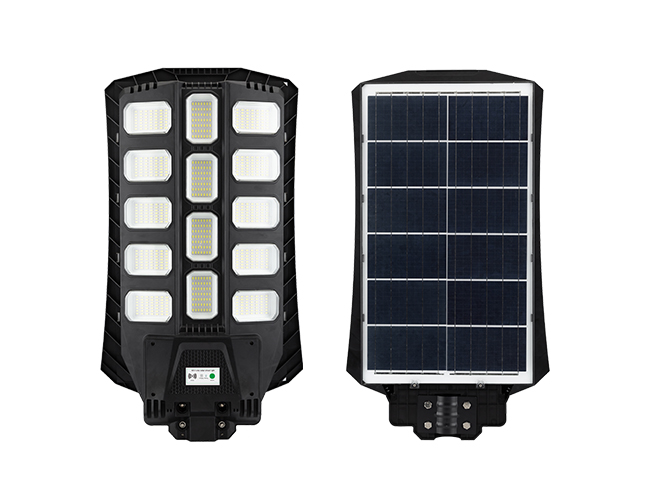
For these applications, an All-In-One Solar Street Light is often a practical choice because it integrates the solar panel, battery, LED module, and controller into one compact unit.
The integrated design reduces installation complexity and is suitable for projects where construction resources are limited.
Recommended: 40W-100W Solar Street Light
Residential communities usually require comfortable lighting rather than extremely high brightness.
Important considerations include:
Energy efficiency
Stable operation
Simple maintenance
Long service life
A properly selected solar street light can provide sufficient illumination for pedestrian areas, community roads, and small parking spaces while maintaining energy efficiency.
Recommended: 100W-150W Solar Street Light
Urban roads require stronger illumination because of:
Higher traffic volume
Wider roads
Longer operation hours
Medium-power solar street lights provide a good balance between brightness, energy efficiency, and investment cost.
For commercial areas and industrial parks, buyers usually need solutions with higher lighting output and longer working time.
Recommended: 150W-200W Solar Street Light
Highway projects require:
High brightness
Long backup time
Stable operation
Large coverage area
For these applications, an All-In-Two Solar Street Light can provide advantages because the separated solar panel design allows larger photovoltaic capacity and higher battery configurations.
These systems are suitable for roads, highways, municipal projects, and large-scale outdoor lighting applications.
Different solar street light structures are suitable for different wattage ranges.
An All-In-One Solar Street Light is suitable for:
30W-150W applications
Villages
Residential areas
Parks
Small roads
Advantages include:
Integrated structure
Fast installation
Reduced wiring requirements
Easy maintenance
The compact design makes All-In-One systems suitable for projects requiring simple installation and efficient deployment.
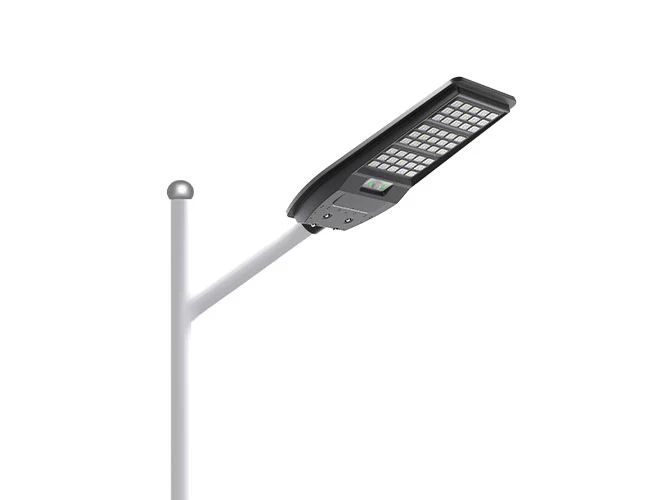
An All-In-Two Solar Street Light is suitable for:
100W-200W applications
Highways
Municipal roads
Industrial parks
Large commercial projects
Advantages include:
Larger solar panel flexibility
Higher battery capacity
Stronger lighting performance
Longer operation duration
For buyers looking for a balance between installation convenience and stronger performance, All-In-Two systems are often an effective solution.
Compared with integrated designs, the semi-split structure provides more flexibility for larger lighting requirements.
Choosing the correct solar street light wattage requires evaluating several factors.
Before purchasing, buyers should evaluate:
Road width
Pole height
Required brightness
Working hours
Local sunlight conditions
A detailed project evaluation helps avoid selecting systems that are either underpowered or unnecessarily oversized.
A reliable solar street light requires proper matching between:
LED power
Solar panel capacity
Battery capacity
Controller performance
The LED wattage should work together with the energy generation and storage system to ensure stable operation.
The lowest-cost option is not always the best choice. A properly matched system can reduce maintenance requirements and provide better long-term value.
Choose lower wattage solutions when:
The project has standard lighting requirements
The lighting area is small
Cost efficiency is important
Choose medium wattage solutions when:
Roads require stronger illumination
Longer working hours are needed
Commercial applications require stable performance
Choose high wattage solutions when:
The project is large-scale
High brightness is required
Long backup time is necessary
Working with an experienced solar street light manufacturer like Anern helps buyers select the most suitable configuration based on project requirements, environmental conditions, and application goals.
Selecting the right solar street light wattage requires more than choosing the highest power option. The ideal solution depends on application requirements, installation environment, road conditions, and system configuration.
Lower wattage solar street lights are suitable for villages, residential areas, and small projects where efficiency and cost control are important. Medium and high wattage systems are better choices for urban roads, highways, and large infrastructure projects requiring stronger illumination.
By understanding solar street light wattage selection, contractors, distributors, and project owners can choose reliable lighting solutions that deliver long-term performance and value.
Anern continues to provide professional solar lighting solutions with different power options to support various outdoor lighting projects worldwide.
How many watts should a solar street light be?
The required wattage depends on the application. Small roads may require 40W-100W solar street lights, while highways and large infrastructure projects may need 150W-200W systems.
Is a higher watt solar street light always better?
No. The best wattage depends on road conditions, lighting requirements, pole height, and local environment. A properly matched system is more important than simply choosing higher power.
What wattage solar street light is suitable for highways?
Highways generally require 150W-200W solar street lights because they need higher brightness, longer working hours, and larger system capacity.

Bob Wu is a solar engineer at Anern, specialising in solar street lighting and off-grid systems. With over 15 years of experience in renewable energy solutions, he designs and optimises solar-powered lighting and energy systems for global projects. His expertise ensures efficient, sustainable and cost-effective solar implementations.

Make your business profitable
Zero your Electricity bill
Leading the solar solutions industry

 English
  français
  Deutsch
  Español
  italiano
  русский
  português
  العربية
  Türkçe
  Malay
Malay  Indonesia